
Ptosis Surgery
Have you noticed that one or both of your upper eyelids appear lower than before? Does one eyelid look droopy in photographs, or do you find yourself raising your eyebrows or tilting your head back to see more clearly?
These may be signs of ptosis, a condition in which the upper eyelid droops over the eye. While mild ptosis may mainly affect appearance, more significant drooping can interfere with the upper field of vision and make everyday activities such as reading or driving more difficult.
Ptosis can have different causes and may affect children or adults. When surgery is appropriate, an oculoplastic specialist can assess the eyelid position, muscle function, vision, and overall eye health before recommending the most suitable treatment.
For patients looking for a Best Oculoplastic Surgeon in Gurugram, Dr. Saurbhi Khurana provides specialized care for eyelid and periocular conditions, including ptosis. Her practice focuses on oculoplasty, reconstructive surgery, and ocular aesthetics.
What Is Ptosis?
Ptosis, also called blepharoptosis, refers to drooping of the upper eyelid. It can occur in one eye or both eyes.
The amount of drooping can vary. In some people, the eyelid barely covers the upper part of the eye, while in others it may extend far enough to obstruct part of the pupil and affect vision.
Ptosis can be present from birth or develop later in life. In adults, age-related changes affecting the eyelid lifting mechanism are among the possible causes. Other causes can include previous eye surgery, trauma, neurological conditions, or problems affecting the muscles or nerves responsible for eyelid movement.
What Are The Signs Of Ptosis?
The most noticeable sign is a lower-than-normal upper eyelid. However, ptosis can cause several other symptoms.
You may notice:
- One eyelid appearing lower than the other
- Reduced upper or peripheral vision
- A tired or uneven appearance
- Frequently raising your eyebrows to see better
- Tilting your head backward to improve vision
- Forehead strain or headaches
- Difficulty reading or performing activities that require a clear upward field of vision
The symptoms depend on the severity and cause of the ptosis.
Why Does Ptosis Happen?
There is no single cause of ptosis. In children, it may occur because the eyelid lifting muscle does not develop normally.
In adults, ptosis may develop because of age-related changes in the levator muscle or its supporting tissues. It can also occur after certain eye or eyelid surgeries, trauma, or as a result of muscle or nerve-related conditions.
Because some causes of a droopy eyelid can be related to underlying medical conditions, a proper examination is important before planning surgery.
When Is Ptosis Surgery Recommended?
Not everyone with ptosis requires surgery.
If the drooping is mild and does not affect vision or cause significant problems, observation may sometimes be appropriate. However, surgery may be considered when ptosis affects the visual field, causes functional difficulties, or produces significant asymmetry or cosmetic concerns.
An ophthalmologist or oculoplastic surgeon will assess the degree of drooping and determine whether surgery is appropriate. The underlying cause, eyelid measurements, levator muscle function, eye movements, and overall eye health all influence treatment planning.
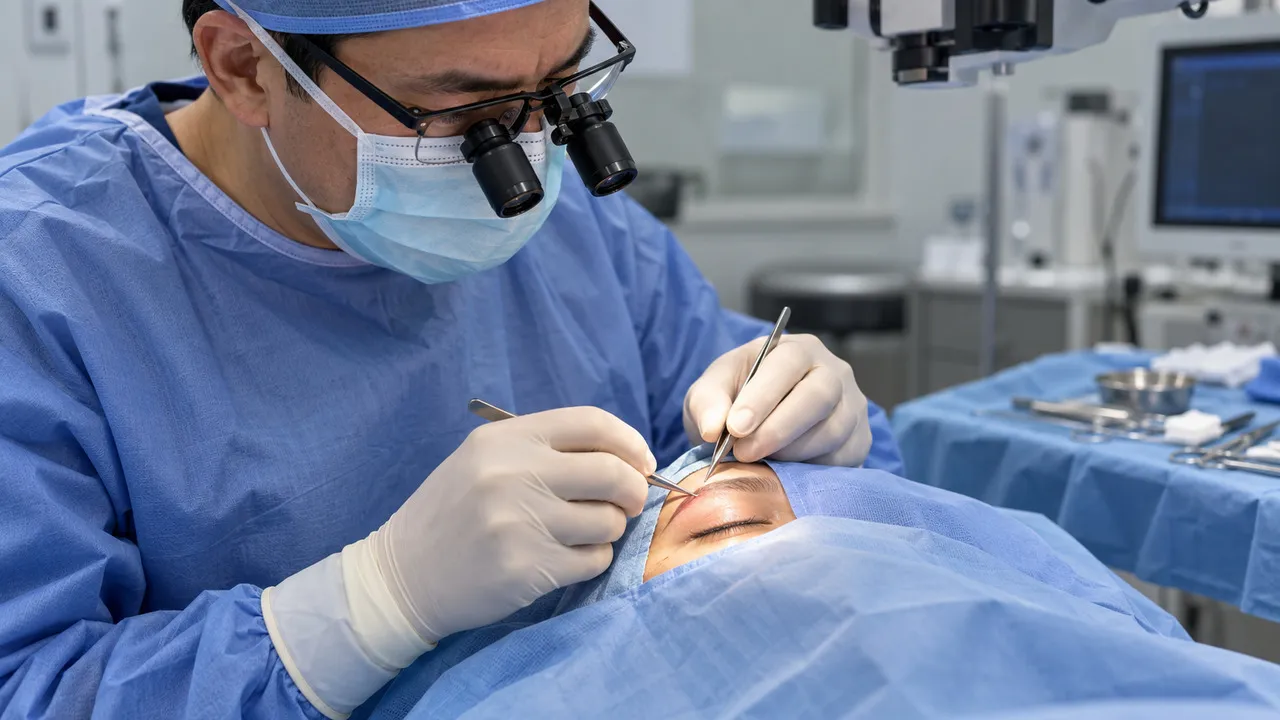
What Happens During Ptosis Surgery?
Ptosis surgery is designed to elevate the upper eyelid to a more appropriate position.
The surgical technique depends on the strength and function of the eyelid lifting muscle and the type of ptosis.
One commonly used approach involves levator advancement or repair, where the surgeon adjusts the levator muscle or its supporting tissue to improve eyelid elevation.
For patients with very weak levator function, a frontalis sling procedure may be considered. This connects the eyelid to the forehead muscle so that forehead movement can help elevate the eyelid.
The appropriate procedure is selected after detailed examination rather than using the same technique for every patient.
Is Ptosis Surgery Only For Cosmetic Reasons?
No. Ptosis surgery can have both functional and cosmetic goals.
When the eyelid blocks part of the visual field, correcting the drooping can help improve the amount of vision available above and in front of the eye. Surgery can also improve eyelid symmetry and the overall appearance of the eyes.
This is why ptosis correction should be viewed as more than simply an aesthetic procedure when significant eyelid drooping is affecting function.
What Happens Before Ptosis Surgery?
A detailed evaluation is an important part of ptosis treatment.
Your oculoplastic surgeon may assess:
- Eyelid height and symmetry
- Levator muscle function
- Eyelid movement
- Pupil size and eye movements
- Vision and visual field
- Brow position
- Previous eye or eyelid surgeries
- Medical history and medications
If the pattern of drooping suggests an underlying neurological or muscular condition, additional evaluation may be recommended before surgery.
What Is Recovery Like After Ptosis Surgery?
Some swelling and bruising around the eyelids are common after surgery. Temporary tightness, discomfort, or differences in eyelid position may also occur during the early healing period.
Your surgeon will provide specific instructions regarding eye care, medication, activity restrictions, and follow-up appointments.
Because healing continues after the procedure, the final eyelid position and symmetry may take time to settle.
Why Choose An Oculoplastic Specialist?
The eyelids play an important role in protecting the eye, maintaining the tear film, and contributing to facial symmetry. Ptosis surgery therefore requires attention to both eyelid function and appearance.
An oculoplastic surgeon specializes in conditions affecting the eyelids, orbit, tear ducts, and surrounding structures. Dr. Saurbhi Khurana is widely renowned oculoplastic surgeon with specialized training in oculoplasty and ocular aesthetics and focuses on periocular plastic and reconstructive surgery.
For patients searching for the Best Oculoplastic Surgeon in Gurugram, a specialist evaluation can help determine whether ptosis surgery is appropriate and which surgical approach best matches the individual's eyelid anatomy and functional needs.
When Should You See A Doctor For A Droopy Eyelid?
A gradually drooping eyelid should be evaluated, particularly if it affects vision or continues to worsen.
A sudden onset of drooping, especially when accompanied by double vision, unequal pupils, severe headache, facial weakness, or other neurological symptoms, requires prompt medical assessment because some causes may need urgent attention.
Even when the drooping develops gradually, an examination can help identify the cause and determine whether observation, medical evaluation, or surgery is appropriate.
Take The Next Step For Droopy Eyelids
A droopy eyelid may seem like a cosmetic concern, but it can sometimes affect vision and indicate an underlying eyelid or medical problem. A detailed evaluation can determine the cause of ptosis and whether surgery is appropriate.
If you are looking for a Best Oculoplastic Surgeon in Gurugram, or searching for a Best Oculoplasty Doctor in Gurugram for droopy eyelid evaluation, Dr. Saurbhi Khurana can assess your eyelid function and discuss personalized ptosis treatment options.
Whether you are concerned about vision, eyelid asymmetry, or the appearance of droopy eyelids, specialized oculoplastic care can help you understand your options and make an informed decision.
FAQs
Q: What is ptosis surgery?
A: Ptosis surgery is a procedure used to correct a drooping upper eyelid. Depending on the cause and muscle function, the surgeon may adjust or strengthen the eyelid lifting mechanism to improve eyelid position and, when necessary, the visual field.
Q: Can ptosis affect vision?
A: Yes. Significant upper eyelid drooping can obstruct part of the visual field, particularly the upper field. Some people may compensate by raising their eyebrows or tilting their head backward.
Q: Is ptosis surgery performed for cosmetic reasons?
A: Ptosis surgery can address both functional and cosmetic concerns. It may improve vision when the eyelid obstructs the visual field while also improving eyelid symmetry and appearance.
Q: Is ptosis surgery suitable for everyone?
A: No. Treatment depends on the cause and severity of ptosis, eyelid measurements, levator muscle function, eye health, medical history, and whether an underlying condition needs to be addressed first.
Q: How long does it take to recover from ptosis surgery?
A: Recovery varies between patients. Swelling and bruising are common during the early healing period, while the eyelid position continues to settle over time. Your surgeon will provide individualized recovery instructions.
Q: Can ptosis come back after surgery?
A: Ptosis can recur in some patients, depending on its cause and other individual factors. Your oculoplastic surgeon can discuss the expected long-term outlook during your consultation.
Q: Can children have ptosis surgery?
A: Yes. Children with significant congenital ptosis may require treatment, particularly when drooping interferes with visual development or causes abnormal head positioning. The timing of surgery depends on the individual child's condition.


